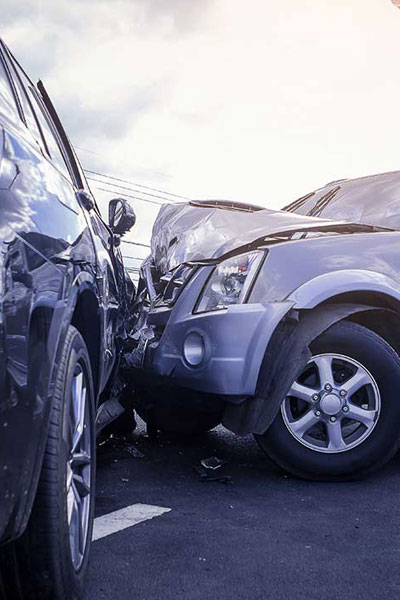
Why Is Vehicle Crash Data So Important in Vehicle Accident Reconstruction?

Limits on Expert Witnesses… Not All Are A Bad Thing!
February 15, 2026
Forensic Engineers – Here’s the Low Down on What We Do….
February 28, 2026
The Black Box in Your Car: How Vehicle Event Data Recorders (EDRs) Revolutionize Accident Reconstruction
When a crash happens, answers rely on eyewitness accounts, skid marks, and vehicle damage. But cars today have a secret witness that offers pretty solid facts: the Event Data Recorder (EDR), sometimes called the vehicle’s “black box.” These devices, installed in the majority of passenger vehicles since the mid-1990s, standardized by the National Highway Traffic Safety Administration (NHTSA) since 2012, capture crucial info before, during, and after collisions. For accident reconstruction experts, EDRs turn uncertainty into solid confirmation.
What Is an EDR?
An EDR is an electronic device, usually part of the airbag control module (ACM) or another unit near it. The EDR continuously records and then overwrites data on a loop until a “trigger event” (hard braking, change in velocity from impact, airbag deployment, etc.) locks in the recording.
Many EDRs traditionally retain 5 seconds of pre-crash data, half-second increments, but they are getting better.
www.federalregister.govnhtsa.gov
EDRs are found in almost all new vehicles and are required to meet strict accuracy and survivability standards so the data remains intact after the vehicle experiences a crash.
www.explico.com

An opened Sensing and Diagnostic Module or SDM from a GM vehicle. This is also called the EDR.
What Data Does an EDR Record?
EDRs provide an impressive set of data that spells out what happened in the moments leading to an impact. Here’s a breakdown of the most valuable elements:
Pre-Crash: Vehicle speed (mph), throttle %, brake switch (on/off), engine RPM, steering angle (in some models)
- Reveals driver speed, braking efforts, and acceleration for evaluation
Crash Event: Delta-V (change in velocity), longitudinal/lateral acceleration, principal direction of force
- Quantifies impact severity and angle- critical for determining dynamics of the crash, and sometimes for injury causation and fault determination
Occupant: Seatbelt status (buckled/unbuckled), airbag deployment timing, seat position
- Shows restraint use and helps correlate with injury patterns
Post-Crash: Time from impact to data lock, system status
- Helps timeline the sequence of events and emergency response

Example of a CDR report from the Bosch CDR system. This graph shows pre-crash data: vehicle speed (green), brake application (red), throttle (blue), and engine RPM (black) in the 5 seconds before a crash.
How EDRs Power Accurate Accident Reconstruction
Vehicle accident reconstruction is an engineering process to figuring how and why a crash occurred. EDR data is key because it’s:
- Objective and Time-Stamped — It eliminates “he said/she said” disputes. Was the driver speeding? The EDR says 54 mph in a 35mph zone. Did they brake? The data shows brake switch activation at 2 seconds before algorithms enable (system senses crash, possible rollover event, etc.).
- Used to Calculate Impact Dynamics — Delta-V (the change in speed during the crash) is the basis for various types of conclusions. Experts combine this with vehicle weights, impact angles, and scene evidence to determine many different aspects of the crash.
- Corroborates Physical Evidence — Tire marks, road gouges, and vehicle damage can be compared to EDR data to validate or refute theories.
- Helps in Legal and Insurance Cases — Courts and insurers often rely on EDR data. It’s been pivotal in debunking false claims (e.g., “I was stopped” when EDR shows continuous movement).

A vehicle accident reconstruction expert imaging the EDR data from a vehicle at the scene.
Real-World Example: In a rear-end collision where the rear driver states the front vehicle “stopped suddenly,” the front vehicle’s EDR showed constant speed with no braking. The rear vehicle’s EDR revealed no brake application until milliseconds before impact. The case settled quickly in the lead vehicle’s favor.
Limitations of EDR Data (Because Nothing’s Perfect)
While incredibly valuable, EDRs aren’t all-knowing:
- They only record when triggered, so minor minor impacts often do not record data.
- Recording windows are short (5 seconds typically, but this is expanding to longer times).
- Not every vehicle records steering input or video.
- Data must be properly interpreted by certified experts—raw numbers can be misleading without context.
The Future: Even More Data, Even Better Safety
Newer regulations are pushing EDRs to capture longer pre-crash windows and more parameters. As vehicles get smarter EDRs will provide even more data, making reconstructions more precise than ever.
Why This May Matter to You
Whether you’re a driver, attorney, expert in vehicle accident reconstruction, or a safety advocate, understanding EDRs helps in determining many things to resolve disputes and to make the roads safer.
When you hear about a “black box” in a vehicle accident investigation, remember: it’s one of the most reliable eyewitness and evidence provider in the whole thing.
Have questions about EDR data in a case? Check with a professional vehicle accident reconstructionist- they know how to unlock these digital secrets.
www.performanceanalysisllc.com