Using Photographs As Notes? A Great Forensic Engineering Method!

Daubert Motions: Are They Getting To Be Too Much?
March 7, 2026
Senior Forensic Engineers as the “Face of Testifying” or No?
May 6, 2026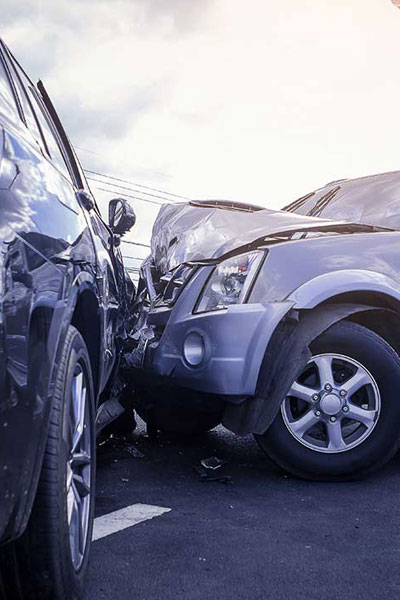
Whenever forensic engineers get out in the field and inspect sites, equipment, etc. (e.g., facilities, construction sites, products, vehicle accident sites) taking photographs instead of notes can be advantageous. Notes may still be necessary for details or comments on photos, but photos are provide objective, detailed, and court-admissible records.
Key Advantages of Prioritizing Photos Over Notes
Accuracy and Objectivity — A photo captures everything that was there (damage, rust, tire marks). Details can be missed with notes. Notes can be subjective, or they can contain words that may be spun against the engineer by opposing counsel.
Detail Capture — We can zoom into photos at such high resolutions that weld imperfections, fine cracks, even some skid marks can be seen on a computer when they’re not discernible with the naked eye. This is critical for failure analysis and vehicle accident reconstruction when fine details can make the difference.
Spatial Relationships — Photos capture positions, orientations, distances and other important features more effectively than drawings and notes. This is particularly true with complex cases like collapsed structures or accident sites.
Permanence and Reviewability — Images are an enduring visual record for future review, expert consultations, or courtroom demonstratives. They recreate the site even years later when we re-examine them. Notes can be ambiguous after time passes and memory fades.
Courtroom Strength — Photos can be excellent demonstrative evidence, sometimes “worth 1,000 words”, as we’ve all heard and said. They provide objective truth which allows the court and other parties to see the facts as they were. Arguments are minimized.
Efficiency in Documentation — Digital photographs are captured but the hundreds, and rapidly. Quality and accuracy can be checked as you go, ensuring complete records. Photos may not completely replace notes, but relying primarily on photos reduces errors while taking notes under scrutiny and pressure, eliminates handwriting issues, and simplifies the whole inspection.
Best Practices for Using Photos as Primary Evidence Documentation
Use forensic photography methods adapted from crime scene and engineering failure investigations called the Systematic Series of Photos or the “rule of three”:
- Overall — Wide shots showing the entire scene, context, landmarks, orientation, and surroundings.
- Mid-Range — Relationship shots show key features in context (e.g., damage marks on the door of a vehicle during vehicle accident reconstruction).
- Close-Up — Detailed views of key features (e.g., fracture surface, crack propagation, or material defects).
Include Scales and Identifiers — Use a tape measure, ruler, or some scaled reference in close-ups for later sizing and measurement readings. Use cards in the first shot of a group listing any important notes or identifiers.
Multiple Angles and Perspectives — It is best to take photos from different angles and even from above if doable.
Lighting and Focus — Natural light is best. Flashes and external lighting can be used when necessary to show details, textures, etc. Glare is to be avoided at all costs.
Metadata and Chain of Custody — Modern cameras (and phones) automatically include timestamps, location, and other camera and setting data. Avoid deleting photos, even those that are blurry or otherwise low quality, to maintain a solid chain of custody.
Video and drones — Video may be used at times to illustrate motion, create large captures, or for 3D photogrammetry efforts. Drones may be used for overhead images or 3D modeling.
In forensic engineering, photographs can make up the majority site and scene documentation. They may be used in reports, in deposition, and in trial as demonstives. While notes may still be necessary in some instances, it is possible, and sometimes favorable to document everything by photographs alone if done properly.